August in Mobile does a number on a house. The sun bleaches, the rain blows sideways down Airport Boulevard, and the salt air off the bay chews on anything that wasn't sealed up right the first time.
That's most of my work. We hang vinyl siding on homes from Midtown out to West Mobile and down through Theodore, and we do it the slow way: wrap taped, J-channel cut clean, nails snug but not driven tight so the panels can move when the heat hits. Vinyl nailed down like plywood buckles by the second summer.
Here's the promise. We show up when we said, we don't talk over you, you get a person on the phone, and the yard gets swept before we leave.
Keep reading for how Mobile Siding Installation actually goes, what moves the price, the styles we hang and the questions folks ask first. Then call (251) 551-3653 and I'll come look.
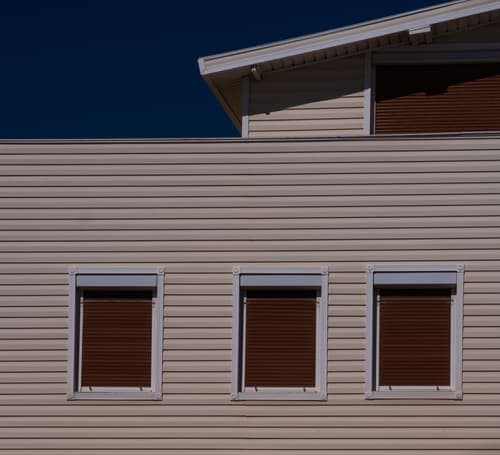
Vinyl Siding Installation
The install is mostly about what happens behind the panel. We strip the old cladding, then check the sheathing for soft spots, because Gulf humidity and a slow drip under a window find each other every time. New house wrap, flashing at the openings, and a starter strip run dead level off a laser line, since a starter that's off by a quarter inch is off by a quarter inch all the way to the gable.
Then the nailing, which is where a lot of vinyl siders get lazy. Vinyl moves. A twelve-foot panel grows on a July afternoon, so nails go in the center of the slot, snug but not crushed. Drive them tight and you'll have waves by August.
We hang CertainTeed vinyl siding and Alside siding in dutch lap or traditional profiles. A Mobile Siding Installation on an average house takes us three to five days.
Colored Vinyl Siding
Color is where most folks freeze up, and I get it. Dark panels take a beating from the Gulf sun, and any wall facing south or west catches hours of it every afternoon. The good news is the material has come a long way: CertainTeed vinyl siding and Alside siding both run color-through formulas with UV packages that hold deep tones far better than the stuff hung on Midtown houses twenty years ago.
A charcoal or hunter green will still shift before a sandstone will. That's physics, not a sales pitch.
Dark also moves more. A panel can grow close to half an inch on a 98 degree day, so we nail loose and centered in the slot. Snug it down and you'll see waves by August.
On a Mobile Siding Installation we order panels, corners and trim together so the run matches. Deep colors look richest on dutch lap siding, where the shadow line gives them somewhere to sit.
Vinyl Eavestrough
Vinyl eavestrough is just what the rest of the country calls a gutter, and on a freshly sided house it matters more than folks expect. All that water off the roof in a July thunderstorm has to go somewhere, and when it dumps against the foundation or runs behind the trim, the siding gets blamed for what is really a gutter problem.
Vinyl won't rust and never needs painting, which counts for something in salt air. It does move in the heat, though, so seams need room to expand and hangers want spacing around every two feet. Stretch them further and you get the sagging belly in the middle that holds standing water and raises mosquitoes like it's a hobby.
We set the fall toward the downspouts and run the discharge out past the slab, not into it. The same crew doing your Mobile Siding Installation hangs the eavestrough, so nobody's pointing fingers when it rains.
Panel Siding
Panel siding is the plain workhorse of the vinyl world. Long horizontal courses, one clean shadow line, nothing showing off. We hang it in double 4 and double 5 profiles, usually 12 foot lengths, and we stagger the seams so you aren't staring at a zipper running up the wall every time you pull in the driveway.
Thickness matters more than color. Thin stock oil-cans in August heat and chatters when a south wind comes off the bay, so we stay with heavier gauge panels from the Alside siding and CertainTeed vinyl siding lines.
The failure we get called out for most is nails driven tight. A 12 foot panel moves about half an inch between a January morning and a July afternoon, so it hangs on the slot with a little play, or it buckles.
Insulated Vinyl Siding
Here is where I get a little opinionated. Hollow vinyl siding rattles around at about R-0.6, which is basically nothing. Insulated panels have contoured EPS foam laminated to the back, so you land somewhere near R-2.5 and, more to the point, the foam kills the thermal bridging over every stud. In a July where the AC never really shuts off, that matters.
It also lies flatter. Foam-backed dutch lap siding doesn't oil-can and wave the way thin panels do once the wall hits 130 degrees in the afternoon sun.
The install is fussier, and any honest crew will tell you so. Thicker starter strip, deeper corner posts, jamb extensions at every window, and nails left loose so the panel can move. Nail it tight and you'll get buckles by August.
Most Mobile Siding Installation jobs on a single-story house run three to five days.
Board Batten Vinyl Siding
Board and batten is the vertical look, wide panels with raised battens running from the water table up to the eave, and it's having a real moment on the porch cottages around Oakleigh and Midtown.
Vertical vinyl siding isn't just panel siding turned sideways. It wants furring strips over the sheathing so the panels have something to grab, and the bottom cut has to be dead level, because a batten line that wanders tells on you from the sidewalk. Fastening is where most of it goes wrong. Leave each nail centered in the slot with a little play so the panel can move when a south wall bakes in July, and it stays flat.
Snug them down and you'll have ripples by August.
We run it in Alside siding and CertainTeed profiles, often as a gable or porch accent over dutch lap siding on the body of the house. A whole house is a four to six day Mobile Siding Installation, weather permitting.
Vinyl Shake Shingle Siding
Vinyl shake shingle siding is what I'd put on a gable end or a dormer when the rest of the wall is doing its job and you want one part to speak up. Half the older cottages around Oakleigh and Spring Hill wear them well.
It comes in panels with a staggered edge molded in, so watch the repeat. Run them straight out of the carton and the same "random" pattern lands every fourth course, and a wall that reads like wallpaper is the one thing nobody unsees. We break cartons and shuffle courses before anything goes up, which is the part plenty of vinyl siders skip.
Then the nail. Center it in the slot, leave a little play, and summer heat has somewhere to go. Pin it tight and the panel oil cans. Two gable ends is usually a day, more on scaffolding.
Vertical Vinyl Siding
Vertical panels run top to bottom, so rain sheets straight off instead of sitting in a lap joint, which matters when a Gulf thunderstorm dumps two inches on Midtown in forty minutes. Most walls here aren't flat enough to take it raw, so we fur out with 1x3s roughly every 12 inches, shim the low spots, then set base and utility trim before a single panel goes up.
Here's where it goes wrong. Vertical vinyl siding moves more than people think, and a 12 foot panel can grow close to half an inch on a July afternoon. Nail it tight and by August your gable looks like a washboard. We nail center of slot, leave a gap, and let it float.
Gable ends and porch skirts are where our Mobile Siding Installation crews use it most.
Vinyl Shake Siding
Vinyl shake siding is where I get to show off a little. Most of the time we're not wrapping a whole house in them. It's a gable end, a dormer face, or the porch apron sitting above the lap, and suddenly the place looks like somebody thought about it. A staggered vinyl cedar shake siding panel keeps its color through a Mobile summer without the splitting and graying real cedar hands you in three or four years.
Nailing is where shakes go wrong. The panels move more than you'd guess when an afternoon parks at 98 degrees, so we center every nail in the slot and leave it loose enough to slide. Drive them tight and the gable ripples by the end of the season.
Height and access move the cost of shake work more than square footage does. A second story dormer means staging, and every course that meets a window gets hand cut.
Dutch Lap Siding
Dutch lap is the profile most folks picture when they picture siding at all: that little concave groove milled into the top of each course, so the shadow line reads deeper than a flat clapboard. It suits the older bungalows around Midtown and Oakleigh better than anything else we hang. Both CertainTeed siding and Alside make it in double 4 and double 5 panels.
Here's where it goes wrong. Vinyl siders who nail the panel tight lock it in place, and a July afternoon in Mobile will push a 12-foot panel a good half inch. Nail in the center of the slot, leave about the thickness of a dime under the head, and let it move. Otherwise you get waves by August.
We stagger seams and turn every overlap away from the street on Mobile Siding Installation work, so the wall reads clean from the curb.
Vinyl Cedar Shake Siding
Vinyl cedar shake siding gives you that staggered, hand-split cedar look without the rot, and without anybody up a ladder painting vinyl siding over the porch roof every few years. It's the panel I get asked about most for gables, dormers and porch skirts around Oakleigh and the older streets off Dauphin.
Randomness is what sells it as wood. Shake panels come with a repeating pattern molded into them, so if you stack them straight up the wall the same face lands every four courses and the gable reads like a screensaver. We rotate and shuffle courses as we go.
The other thing that ruins a shake gable is nailing tight. Vinyl grows and shrinks with the heat, so the nail head sits about a dime's thickness proud of the hem. Nail it home and you get waves by Labor Day.
Vinyl Siding Repair
A tropical storm peels three panels off the gable and suddenly you're an expert on wind ratings. Repairs start with a zip tool, unlocking the course above the damage so the broken panel slides out without disturbing the rest. The hard part is matching.
Dutch lap siding from fifteen years back has faded in our sun, and a brand new panel next to it will glow like a new tooth, so I'd rather pull a sound piece off the back wall and use it on the street side. We stock common CertainTeed siding and Alside siding profiles, but discontinued colors can take a week to source. Most jobs, four or five panels around a hose bib or a chewed corner post, take a morning.
Watch for nails driven tight: vinyl siding needs room to move, and a panel pinned down will wave at you by July. A fair share of what we do under Mobile Siding Installation started as a small repair.
What the job involves
Every Mobile Siding Installation we run starts the same way: the old panels come off so we can see what's underneath. Down here that's where the surprises live, soft sheathing under windows where wind driven rain has been sneaking in since the last storm season. No point hanging new siding over rot.
Then house wrap, flashing at every opening, a level starter strip, and panels hung rather than hammered flat. Vinyl moves. A twelve foot panel can grow close to half an inch on a 95 degree August afternoon, so the nail heads stay a hair loose and the ends stay short in the channels. Skip that and you've got waves by Labor Day.
We hang CertainTeed vinyl siding and Alside siding, usually dutch lap siding. Four to seven days on a typical house, longer with heavy trim work.
What it costs
Straight numbers, since you asked. Installed vinyl siding around here runs roughly $2.81 to $4.05 a square foot, and most mid grade jobs land near $3.43. A 50 foot ranch off Airport Boulevard usually falls between $3,000 and $7,000 by the time we're pulling the ladders off the truck.
What moves that figure is corners, gables and openings, not just square footage. A simple rectangle is cheap. A house with three dormers and a wraparound porch is not. Profile matters too, so dutch lap siding sits at the friendly end while shake and vertical panels climb, and CertainTeed vinyl siding costs more than the builder grade Alside siding line.
Call us at (251) 551-3653 and we'll measure yours properly. Every Mobile Siding Installation quote we hand you is itemized by wall, trim and tear off, so you can see where the money actually goes.
When vinyl siding is the wrong fix
Sometimes vinyl siding is the wrong answer, and I'd rather tell you that standing in the yard than after the trailer's unloaded. If the sheathing behind your old panels is soft, new panels just cover the rot while it keeps working on the studs. That's carpentry first.
If you've got a stain running down an interior wall, the trouble is usually above it: rotten fascia and soffit, a gutter dumping straight against the sheathing, or a roof at the end of its life, which is a roof repair or a metal roofing conversation before anybody prices a wall. Proper gutter installation has saved more siding than I care to count.
In the historic districts it often isn't permitted at all, and where you want real impact toughness, fiber cement composite siding wins. Two cracked panels? That's a vinyl siding repair.
Why choose us for this
Your south wall has chalked out, a couple of panels behind the hose bib cracked in the last big blow, and what you want is vinyl siding you can quit thinking about until the kids are grown. Not a project. Not somebody to babysit.
A cheaper bid usually gets cheap by leaving things off the sheet: the vinyl siding trim, new J-channel at the windows, and any sheathing that went soft behind those cracked panels. You meet that decision in year two, when water tracks in behind a corner post and the fix costs more than the savings did. I price the trim, the housewrap and the bad plywood in at the start, so the figure you heard is the figure you sign.
An estimate, whether it turns into a vinyl siding repair or a full dutch lap vinyl siding wrap, costs nothing and commits you to nothing.
Frequently asked questions
Can I have one damaged panel swapped out instead of the whole wall?
Usually, yes. A cracked piece of vinyl siding comes out with a zip tool in about ten minutes, and if the color still matches, you're finished. Fade is what beats us. Ten years of sun leaves a wall a shade lighter than the panel in the box, so a vinyl siding repair on a sunny south elevation can read like a bandage. Once the damage crosses about a third of a wall, replacement is the cleaner answer.
How long is my house torn up?
Most single-story homes run two to three days. We open one wall at a time, so nothing sits bare overnight when an afternoon thunderstorm shows up.
What moves the vinyl siding replacement cost most?
Square footage first, then corners, gables and windows, because trim and cut-in work eat hours that open wall doesn't. Two-story access and rotten sheathing behind the old siding push it further.
Contact Mobile Siding Pros now
Contact the siding pros working Mobile now at (251) 551-3653. Somebody's here nine to five Monday through Friday, and a message left after hours gets a call back. If a wall's been peeled open by a storm and it genuinely can't sit, we'll come out on a Saturday.
When I walk your place I count corners and openings, push a screwdriver into the sheathing under the windows, and see what shape the vinyl siding trim is in around the doors. Corners, gables and a second story move the number more than the plain wall footage does, and rotten sheathing found behind the old panels moves it again.
Plenty of vinyl siding contractors will price a house off a satellite photo. Whether it's white vinyl siding on a ranch off Cottage Hill or a full vinyl siding replacement, I'd rather stand at the wall first.