Water sheeting off the roof edge in a solid curtain, six feet from where a downspout ought to be putting it.
Gutter installation around here is not a rain problem, it is a bucket problem, and it always starts the second the charcoal is lit. The same crew that hangs our siding runs seamless gutters off the machine parked in your driveway, so the only joints on the house are the corners and the outlets.
You get about ninety seconds in a real downpour to find out whether somebody pitched the run properly and screwed the hangers into solid wood, or nailed them into a fascia that had already gone soft underneath the paint.
The mess on this work is aluminum offcuts and screws, and those come out of your flowerbeds with a magnet before we pull away.
Keep reading for how we hang them, what moves the price, guards, repairs and replacement. Or call (251) 551-3653 and I will come take a look with you.
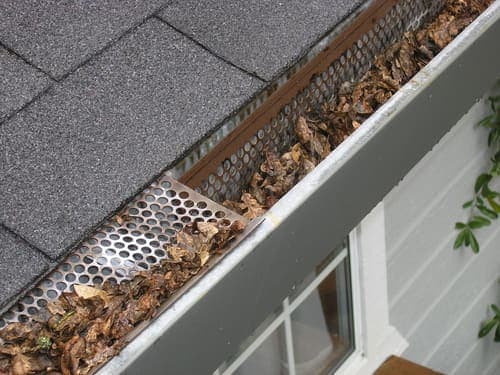
Gutter Guard Gutters
Guards and gutters are one system, not two separate purchases. Screw micro mesh gutter guards onto a sagging five inch trough that's still hung on old spikes and you've built a very tidy roof for water to leap right over. So when we price gutter guard gutters, we're quoting the whole thing: new seamless gutters, hidden hangers every two feet, 3x4 downspouts, then the guard on top of a run that actually drains.
Live oaks around here don't take a season off. Leaves in spring, catkins right behind them, pine straw the rest of the year. A six inch trough pitched correctly will swallow an August downpour that a clogged five inch one throws at your foundation. The same crew that runs our local siding installation service hangs these, so your fascia and drip edge get a proper look while we're up there.
Mesh Gutter Guards
Mesh is the guard I put on most houses here, and the reason is pine straw. Live oaks around Midtown drop leaves in spring instead of fall, and the pines drop year round, so a screen with big holes just collects a mat of needles on top and waits for a storm to wash it into a dam. A good mesh panel, aluminum frame with a fine stainless screen, screws down to the gutter itself.
It never gets slid up under your shingles, which lifts the first course and gives water a place to sit.
Done right, a mesh leaf guard rides low enough that rain sheets off the roof and through it instead of shooting over.
Most of these go on the same day we hang seamless gutters, and our local siding installation service crew handles both.
Leaf Guard
Mobile's live oaks don't drop leaves politely. Catkins in March, a slow dusting the rest of the year, and pine straw filling in whatever's left. That's the job a leaf guard is actually up against here.
A good one fastens to the gutter, not up under your first course of shingles. Lifting shingles to slide a panel in trades a clogged gutter for a leaky roof, and I've pulled off plenty of both. So we check hangers and pitch before anything goes on, because a gutter leaf guard bolted to sagging gutters just gives water a fresh place to pool.
Most houses take a day. Heavy oak and pine cover push you toward a tighter mesh; a clean roof line over seamless gutters is simpler. Same hands you'd meet through our local siding installation service, working one roof line at a time.
Seamless Gutters
Seamless gutters get rolled out of a coil on a machine parked in your driveway, one unbroken length from the corner to the downspout. No joints along the run, and joints are where gutters give up. A sectional run has a seam every ten feet, held together with sealant that hardens, splits, and starts dripping on your azaleas by the second summer.
For seamless gutter installation we hang 5-inch or 6-inch K-style aluminum on hidden hangers screwed into solid fascia every two feet, pitched about a quarter inch over ten feet so a hard afternoon rain actually moves instead of standing in the trough raising mosquitoes. Soft or rotted fascia gets cut out first, because screws in punky wood let go the first time the gutter fills.
Run length, a second story, and 6-inch stock are what move rain gutter prices on seamless rain gutters.
Seamless Aluminum Gutters
Seamless aluminum gutters still have a few joints, just not out in the middle of the run. We roll them on site off a coil, so a 40-foot wall comes off the machine in one length, with seams only at the corners, the end caps and the outlets. Plenty of gutter contractors still hang sectional stock cut in a warehouse, and those weep at every joint eventually. In a big ol' fat rain, eventually shows up by Tuesday.
We hang 5-inch and 6-inch K-style in .032 aluminum on hidden hangers screwed every two feet into solid fascia, not spikes, which work their way out of tired pine board after a few hot summers. We set the fall so water keeps moving to the outlet instead of standing in the belly of the run breeding mosquitoes. Total footage, the number of corners and outlets, and one story versus two are what move the price on seamless rain gutters.
Gutter Repair
Not every sagging run needs to come down. A good share of the gutter repair calls I get around Spring Hill and Midtown turn out to be hangers, not gutters. Spike and ferrule setups back out of the fascia a little further every August storm, and once a section tilts, water pools at the low spot instead of running to the outlet.
So we pull the old spikes, replace any soft fascia board, and hang the run on hidden hangers screwed into solid wood every two feet. Separated miters get cleaned back to bare aluminum before sealant goes on, because caulk over grit and old sealant lets go by the next tropical downpour.
The crew that runs our local siding installation service is up there anyway, so loose trim and rotted wrap get handled in the same visit. When a run has three or four failing joints, though, repair is throwing good money after bad, and I'll say so.
Storm Gutters
A Mobile summer squall doesn't drizzle. It dumps a couple of inches in half an hour off the Bay, and a 5-inch trough on a steep roof gives up early, sheeting water straight over the front lip and into your flower beds.
So on the storm-exposed sides of a house we run 6-inch K-style with 3x4 downspouts, hidden hangers screwed into the fascia about every two feet, tighter under a valley where the water piles up. Spike-and-ferrule hardware is what works loose in a Sally-grade wind and leaves a whole run flapping like a screen door. Seamless gutters help here too, since the only joints are the corners and outlets, and joints are where a hard blow starts a leak.
The same crew behind our local siding installation service checks the fascia for rot first, because gutter installation on soft wood is just a better-looking failure.
Rain Gutter Repair
Rain gutter repair is most of what we get called out for, and it usually comes down to three things: hangers pulled loose from soft fascia, a corner miter split open, or a downspout packed solid with pine straw and live oak litter after a hard afternoon storm.
Plenty of gutter contractors will run a fat bead of caulk over the seam and call it handled. That holds about three storms. We take the section down, scrub the metal back to clean, reseal it properly and re-hang it with real fall, roughly a quarter inch every ten feet, so water actually leaves the house instead of standing in the trough and breeding mosquitoes.
If the board behind has gone soft and punky, that's carpentry, and we do it the same trip. When the joints keep letting go on an old sectional run, seamless rain gutters end the argument.
Micro Mesh Gutter Guards
Mobile clears sixty-odd inches of rain most years, and micro mesh gutter guards are the only style I trust to keep up with that. The mesh is stainless steel, woven fine enough to stop pine straw, live oak catkins and the grit that sheds off an aging shingle roof. It clamps onto the gutter and tucks under the first course of shingles instead of being screwed through them. Screw through a roof and you've just bought a leak.
The other common mistake is setting the guard dead flat. With no pitch to it, water sails right over during an August thunderstorm, which is the exact storm you put it up for. We fit them on new seamless gutters and on sound existing ones alike, usually a day on a one-story house. Same crew as our local siding installation service, so ladders and fascia are familiar ground.
Gutter Replacement
There comes a point where patching stops paying. If the back run sags like a hammock, the seams weep every time we get one of those August downpours off the Bay, or the old spikes have chewed the fascia to mush, gutter replacement beats another round of gutter repair.
Here's how we do it. Old gutters come down, then we get eyes on the fascia board. Rotten wood gets swapped before anything is hung on it, because screwing new seamless gutters into soft pine is just scheduling the same phone call for next spring. We roll the run on site, set the pitch, hang it on screws into the rafter tails, and add downspouts where the roof actually dumps water, not just at the corners.
Most houses, that's a day. The same crew that runs our local siding installation service does this work, so your fascia, trim and gutters line up like they were meant to.
Seamless Rain Gutters
The rain gutters my crew hangs get rolled out of a coil right on site, one continuous length from corner to corner, so there's no joint every ten feet sitting there waiting to open up. Sectional stuff out of a box leaks at every seam, and that water doesn't land on the ground. It runs down the back of the fascia board and eats it.
We set hidden brackets into solid wood every couple of feet, pitch each run toward its outlet, and size the downspouts to the roof that's feeding them rather than to whatever's already on the trailer.
What moves the gutter cost per foot is height, the number of inside and outside corners, and whether rotten trim has to come off first. Plenty of gutter installation contractors price the straight runs and quietly skip the corner work.
Gutter Covers
Gutter covers are the piece most people ring gutter installation contractors about right after their second ladder trip of the year. What I won't do is slide a cover up under your first course of shingles. Lift those tabs on a ninety degree afternoon and you've traded a clogged trough for a roof leak. Ours fasten to the front lip and ride on the hangers, so the roof stays sealed.
Solid hoods shed clean, but in a real downpour water can overshoot the nose and land on your azaleas, which is why pitch and trough size matter more than the cover itself. Pine needles are the local enemy, and they thread through anything with a wide opening.
Price moves with run length, story height, tree cover, and how many valleys dump onto one line.
What the job involves
Here's how the day actually goes. We measure every run of fascia first, then roll the aluminum out on the truck so a seamless gutter installation on a sixty-foot side comes off as one piece, with no seam in the middle waiting to split.
The old gutters come down before anything else, and that's usually when rotten fascia board shows itself, especially on houses sitting under the live oaks along Government Street. Bad wood gets replaced before we hang a thing. Then it's pitch, about a quarter inch per ten feet toward the downspouts, sealed miters and end caps, and enough outlets to handle what falls here in July instead of one sad corner spout backing up.
Most homes are wrapped in a day, two if there's carpentry. Same crew you'd meet through our local siding installation service, same ladders.
What it costs
Gutters get priced by the foot, not by the house. So the figure comes down to how much roofline you actually have, how many downspouts it takes to move a July downpour off your lot, whether we're on a one story ranch or reaching a steep second story, and what shape the fascia behind the old gutters is in. Soft, rotten fascia is the surprise that gets people.
Rain gutter prices also climb when you add a leaf guard, though under the live oaks around midtown that's usually money you get back.
I won't quote seamless gutters off a phone photo. Ring us at (251) 551-3653 and we'll pull a tape across the roofline and count corners and outlets first.
The same crew behind our local siding installation service does that measuring, so bad trim gets caught on day one.
When gutter installation is the wrong fix
Sometimes gutter installation is the wrong fix, and you deserve to hear it before we hang anything. Press a screwdriver into the fascia board first. If it sinks in like a boiled peanut, new hangers will pull loose in the first squall and take the trim with them, so that wood gets replaced before any trough goes up.
If water is running down behind the boards and the shingles at the eave are cupping, what you need is roof repair, not drainage, and no gutter protection sold anywhere will slow that down. On brittle tar shingles it can mean the whole slope. Standing seam metal roofing sheds water fast enough to jump a standard five inch trough, so that gets a wider profile and tighter hanger spacing.
And a flat store roof draining to interior leaders is commercial roofing work. Bolting gutters to it just gives the water a new place to sit.
Why choose us for this
on subject, no CTA.
Let me write.
"Rain comes off your roof edge in a solid sheet during an afternoon storm, and you want gutter installation handled once so it stops being your problem for years." (~28)
"A cheaper bid usually gets there by leaving things off the sheet. Spikes instead of hidden hangers every two feet. No time spent re-pitching the run before anything is fastened. Corners caulked rather than riveted and sealed. Those are the parts that let go in the third year, and the water lands on your fascia." (~55) total 83.
"What moves the number on our gutters services is the length of the run, how many outside corners you have, whether it's a two-story reach, the condition of the fascia we're screwing into, and whether gutter protection goes on at the same time." (~45) total 128.
"Coming out to measure and price it costs you nothing, and there's no obligation to book after." (~17) total ~145. Fine.
Check "gutters services" reads awkward. Use "your gutter installation" already used... Maybe "What moves the number on a job like this is..." and work "gutter guard installation" in place of "gutter protection". Let's use: "and whether gutter guard installation goes on at the same time." Then include "seamless aluminum gutters" somewhere? It has its own section; skip or brief mention in corner sentence: "seamless aluminum gutters are rolled on site", that's the other section's subject. Skip.
Maybe use "gutter service" naturally: "the estimate for the gutter service costs nothing" - awkward. Keep clean.
Use "gutters services" once naturally? "We do gutters services..." awkward. Leave out. Instructions say never at cost of a sentence.
Maybe: "What moves the price on gutter installation services here is..." That fits naturally and uses a variation. Good, that's a second use of a variation, fine (different keyword).
Final check on banned openings and phrases. Good.Rain comes off your roof edge in a solid sheet during one of those afternoon storms, and you want gutter installation handled once so it stops being something you think about for years.
A cheaper bid usually gets there by leaving things off the sheet. Spikes driven through the front lip instead of hidden hangers every two feet. No time spent setting the pitch before anything gets fastened. Corners caulked rather than riveted and sealed. Those are the parts that let go around year three, and then the water is running down your fascia again.
What moves the price on gutter installation services here is the length of the run, how many outside corners you've got, whether it's a two-story reach off a ladder, the shape the fascia board is in, and whether gutter guard installation goes on at the same time.
Coming out to measure and price it costs you nothing, and there's no obligation to book anything after.
Frequently asked questions
Do I need gutter repair or a full replacement?
Repair if the trouble is in one spot. A sagging run, a leaking miter, a downspout knocked loose by a summer squall, all of that is rain gutter repair and usually a same day fix. Go to gutter replacement when the seams weep in three or more places or the aluminum has been bent back straight one too many times. Seamless gutters are rolled on site in one piece per run, so the only joints are the corners.
Will new gutters tear up my fascia?
No. We hang with hidden hangers screwed into solid wood roughly every 24 inches, not old spike and ferrule. If we find soft trim, we stop and show you before anything goes back up.
How do we get started?
Call us at (251) 551-3653 and we'll measure your roof edges, and if the trim board is punky we'll explain what our local siding installation service handles before the gutters go on.
Contact Mobile Siding Pros now
Contact us now, before the next downpour shows you where your gutters gave up. When you call about gutter installation, it helps if you can tell me roughly how many feet of run the house has, how many stories, and whether the fascia boards feel spongy when you push on them.
Soft wood means we're replacing fascia before anything gets hung, and that's the item plenty of rain gutter installation contractors leave off the sheet until the morning the truck pulls up. Somebody's here weekdays, nine to five, messages get called back, and if a job truly can't sit we'll work a Saturday. Ring (251) 551-3653 and we'll walk the house together, Saraland out to Theodore, and size the gutter service and the gutter protection to what your roof actually dumps.