Chalky, buckled boards, and a soft spot under the paint where your thumb goes right in.
Mobile siding gets tested by weather the rest of the country only reads about, so we start with the unglamorous half: pull the old boards, poke hard at the sheathing behind them, and swap out anything spongy before one new course goes up. Nailing house siding over soft sheathing is the thing I refuse to do, because it hides for a couple of years and then telegraphs every seam.
Good siding installers get judged on what shows and earn it on what doesn't. We work West Mobile, Saraland, Spanish Fort and down toward Dauphin Island.
Below, how the siding installation actually goes, what moves the cost, when it's the wrong fix, and what folks ask before they book. Or call (251) 551-3653 and we'll come look at it.
Siding Board And Batten
Board and batten siding is having a moment down here, and I get why. Those vertical boards with battens over the seams give a farmhouse look that suits a raised cottage in Midtown as well as it does a new build out toward Semmes.
Real board and batten needs furring or solid sheathing behind it so we've got something to hit, battens spaced somewhere around 12 to 16 inches on center, and Z-flashing anywhere two courses meet. The mistake I see most is a batten nailed through both edges. Wood moves in our humidity, and pinned on both sides it splits by the second summer.
What moves the number on siding board and batten is the material, engineered wood versus fiber cement, plus how many gables and windows we're trimming. Our Mobile Siding Installation crews plan the batten layout before a single board goes up.
Board Batten Vinyl Siding
Board and batten vinyl siding gives you that tall vertical line of an old farmhouse wall without feeding cedar a fresh coat of paint every few years. Panels come in ten and twelve inch widths with the batten formed right into the face, so the spacing stays even from the porch skirt up to the gable peak.
Fastening is where this one is won or lost. Vinyl grows and shrinks, and a twelve foot panel can pick up a quarter inch on a hot afternoon. Drive the nails tight and the wall ripples like a flag by midsummer. We center every nail in its slot and leave the head about a sixteenth shy of the flange.
Furring matters just as much. Plenty of contractors for siding hang panels over a wavy wall, and crooked battens read from the curb the way nothing else on a house does. What moves the siding installation cost is how much furring that wall needs and how many windows and corners the battens have to break around.
Lp Smart Siding
LP SmartSide is engineered wood strand treated with zinc borate, which matters down here because termites swarm every spring and our humidity chews through anything that isn't sealed. It cuts and nails like real wood, it holds paint better than most sidings, and it doesn't ripple in July heat the way thin vinyl can.
Fastening it right is the whole ballgame. Every cut edge gets primed before it goes on the wall, nails go into framing and not just sheathing, and we hold a gap where lap meets trim so the caulk has something to grab. Butt two boards tight together and the ends swell by August.
Most Mobile Siding Installation work on a single story runs three to five days, longer when we open a wall near the bay and find soft sheathing waiting.
Metal Siding
Metal holds up to our humidity better than most sidings, which is why we keep hanging it on houses this close to salt water. We run steel and aluminum panels, usually 26 or 29 gauge, with a PVDF finish instead of the cheap polyester that chalks out gray after three or four Gulf summers.
What separates good siding installers from the rest is the boring part: hemmed edges, sealed cut ends, stainless or coated fasteners with EPDM washers, and screws snugged rather than gunned down until the panel dimples. Over-driven screws are why some metal walls oil-can and pop in a hard west wind off the Bay. We also leave each panel room to move, because steel grows in July.
Most metal Mobile Siding Installation jobs take four to six days once the old wall is off and the wrap is on.
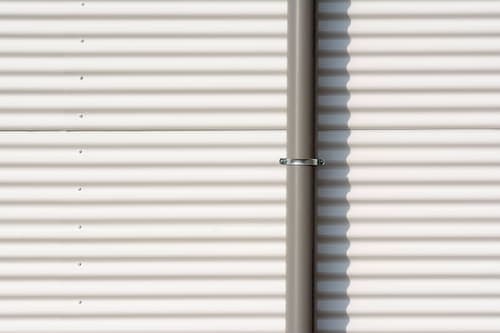
Corrugated Metal Siding
Corrugated metal has climbed off the barn roof and onto porches, gable ends and whole walls around Midtown and out toward Dauphin Island. I like the look. It just punishes shortcuts.
We hang 26 gauge Galvalume panels on furring strips so air can move behind them, because trapping humid Gulf air against a wall is how you get mildew and rust freckles. Screws go through the flat, not the rib, snugged just enough to seat the neoprene washer. Overdrive them and you get dimpled metal and drips in the first good thunderstorm off the Bay.
Cut edges get hemmed, and we cut with shears rather than an abrasive wheel, since hot filings stick to the panel and bloom orange by August. Closure strips top and bottom keep rain and wasps out.
An accent wall takes a day or two. A full house of corrugated siding installation runs closer to a week.
T111 Siding
T1-11 is that grooved plywood panel you see on workshops, camps and plenty of older houses out toward Semmes and Theodore. It's handsome, it hangs fast, and it will absolutely punish you for a skipped step. My rule: every cut edge gets primed, back side included, before the panel ever touches the wall.
Bottom edges stay six to eight inches above grade. Horizontal seams get Z-flashing. Caulk is not flashing, and no tube ever sold has changed that.
Nails go six inches apart on the edges, twelve in the field. Then it wants fresh paint or stain every five to seven years, because our sun and the afternoon storms off the bay are hard on a wood product.
Most T1-11 we pull off during a Mobile Siding Installation failed in the bottom eight inches, where sprinkler spray and splashback sat. Good siding installers watch that strip like a hawk.
Aluminum Siding
Aluminum gets overlooked, and I think that's a shame. It doesn't rot, termites have zero interest in it, and it won't soften next to a grill the way vinyl will. On a lot of midtown houses built in the sixties and seventies, the original panels are still up there doing their job. What they've lost is finish.
Salt air off the bay chalks the paint until the wall leaves white dust on your hand, and hail dimples the flat runs like a truck hood.
So we either refinish or replace. If we replace, we hem the cut edges, leave the nails a hair loose so the panels can move in August heat, and match the profile before we order. Panels nailed tight buckle by the first hot week.
We handle aluminum under the same Mobile Siding Installation crew that runs our vinyl and fiber cement work.
Painting Aluminum Siding
Run your palm down the sunny south wall. If it comes back white, that's oxidation, and paint will stick to chalk about as well as tape sticks to a wet windshield.
So the prep is the job. We wash with detergent and rinse at low pressure, because blasting aluminum at 3,000 psi drives water behind the panels and into the sheathing. Bare spots get a bonding primer, then two coats of 100 percent acrylic. We work the shaded side and stop by early afternoon in July, since paint skinning over in 95 degree humidity is how you get lap marks. Most houses take three to four days.
Honest limit: paint hides oxidation, not dents, and not panels rattling loose at the nail hem. When the seams have opened up, repainting is money spent twice, and Mobile Siding Installation is the better answer for that house siding.
All Siding
Whatever's hanging on your walls right now, we've probably pulled a version of it off a house in Midtown and put something better in its place. Vinyl, fiber cement, LP SmartSide, steel, aluminum, wood, stucco siding, rock siding and stone veneer, cedar shakes, board and batten. All of it lives on our truck, which is the whole idea behind Mobile Siding Installation as we run it: one crew, every material, no subbing out the tricky part.
Why does that matter? Because the material decides how the house handles a Gulf August. Vinyl shrugs off salt air and 90 percent humidity. Fiber cement holds paint through it. Wood wants attention every few years or it tells on you.
What moves your number is square footage, how many corners and gables you've got, and whether the sheathing underneath survived the last storm. Plenty of sidings hide rot we only meet on day one.
Outside Siding
Everybody picks the color first. I look at what goes under it.
On a Mobile Siding Installation we strip back to the sheathing so we can find the soft spots before we cover them up. The weather barrier goes on shingle style, laps running downhill, sill pans under every window, and a kickout flashing wherever a roof edge dies into a wall.
That kickout is a scrap of bent metal worth about two dollars, and leaving it off is how contractors for siding rot out a corner in three summers of afternoon thunderstorms.
Then there's the nailing. Vinyl and most other sidings have to float, so I leave the nail head a hair shy of tight and hold a quarter inch at the trim. Nail a wall drum tight and the first 95 degree August day off Airport Boulevard will wave it like a flag.
Siding Lap
Lap siding is the horizontal kind, each board overlapping the one below so water sheds down and out instead of sitting there. Simple idea, easy to botch. The overlap has to stay consistent, usually an inch to an inch and a quarter, and every course gets blind nailed into framing. Face nails driven through the overlap split boards once our August humidity gets into them.
Butt joints are where sloppy work shows up first. Fiber cement lap wants joint flashing behind the seam, not a fat bead of caulk that's cracked open by the second Mardi Gras. Bottom course stays six inches off grade, and we flash where the roof meets a wall.
The siding installers on my crew snap a line for every single course, because drifting laps are visible from the street. Lap runs are the bulk of what Mobile Siding Installation actually is.
Ship Lap Siding
Shiplap is the one with the rabbeted edge, a notch milled into the top and bottom of each board so they lock into a shallow channel instead of just lapping over each other. Cut clean, that channel sheds water. Cut sloppy, it holds it like a gutter, and in a Mobile August that's a standing invitation to rot and carpenter ants.
The details nobody sees are the ones that matter. We back-prime every board, seal the end cuts, and hang it on furring strips so air can move behind the wood. Plenty of siding installers skip that step because it doesn't show. We also nail so each board can move; pin it through both boards at the lap and you'll have splits by the second summer.
Cedar and engineered wood both hold up here. Bare pine means repainting like it's Groundhog Day.
A wall or two of shiplap usually runs a few days as part of a Mobile Siding Installation, weather permitting.
What the job involves
Tear off first, look second. Every honest siding installation starts with pulling the old boards and reading the sheathing underneath, and in this town the rot usually shows up in the bottom two feet of wall and at the lower window corners. We replace bad OSB, tape the window heads, lap the housewrap shingle-style so water runs out instead of in, and set kickout flashing where a roof meets a wall.
Then the new sidings go on with the fasteners snug, not strangled. Vinyl needs room to move when August hits ninety-five, and a nail driven tight buckles the wall like a bad haircut.
A typical one-story house runs three to five days, longer if we find rot or a July afternoon storm rolls in off the bay.
Square footage, corners, window count, height and hidden rot are what move a Mobile Siding Installation quote.
What it costs
What it costs to reside a house here has less to do with the label on the carton than with the house itself. Square footage is the easy part. After that it's stories, gables, dormers and how chopped up the walls are, because every corner and window means cutting and flashing. Material moves the number too: siding lap goes up faster than fiber cement, and metal siding brings its own trim and fastening schedule.
Then there's what turns up when the old outside siding comes off. On a place that's sat through twenty hurricane seasons, soft sheathing under the windows is common, and that's carpentry before any siding replacement starts. Cover it over and you've sealed water into the wall.
Nobody can price that from a phone screen, so we measure it in person at (251) 551-3653. A fair siding replacement cost lists tear off, disposal, wrap, flashing and trim separately.
When siding is the wrong fix
Sometimes siding is the wrong fix, and I'd sooner say so in your yard than after we've opened a wall. If the sheathing is soft under an overflowing gutter, new panels just cover the rot and it keeps eating. That's a gutter installation and usually some fascia and soffit repair first. Fiber cement composite siding won't save a wall that stays wet behind it either.
Brown stains high on a wall are coming down from above, so what you need is roof work, maybe metal roofing, not a wrap.
Chalky aluminum siding that's still tight and straight? Painting aluminum siding runs a fraction of pulling all siding off a sound house. Two soft T111 panels at the bottom of one elevation get cut out and replaced. Re-skinning the whole outside siding for that is a want, not a need, and vinyl siding can wait.
Why choose us for this
Your siding's chalky, a panel's been flapping since the last storm pushed through, and what you really want is to hire somebody once and not think about the outside of your house again for years. Fair enough.
The number I give you is the number I worked out from what I saw. If we pull a course and find soft sheathing or rot under a window head, you hear about it that afternoon, with what the repair adds, before another board goes up.
Cheaper siding replacement bids usually get cheaper by leaving things off the sheet: house wrap, flashing at the openings, trim wrapped instead of replaced, rotten sheathing covered straight over. You pay for all of it in year two.
The estimate costs nothing and commits you to nothing. I walk the whole house, corners, gable ends, and the aluminum siding out back nobody's painted since it went on.
Frequently asked questions
Can I replace one damaged board, or does the whole wall have to come off?
One board is usually doable, as long as it's vinyl, lp siding or t111 siding and I can match the profile. Color is the sticking point. Ten years of sun fades a wall, so the new piece reads a shade brighter until it weathers in over a season or two. If a storm chewed up a whole elevation, that's siding replacement, not a patch.
What changes the siding replacement cost?
Square footage first, then the material you pick, then how much rot shows up once the old outside siding is off the sheathing. Board and batten vertical siding takes more furring and trim work than siding lap does, and a second story adds staging time. Shrubs grown tight against the wall add labor before we ever hang a panel.
Do you tear the old siding off, or go over the top of it?
Off, on wood and on aluminum siding both. Laying new panels over the old hides soft sheathing and holds damp against it, and I want eyes on the studs before anything new goes up.
Contact Mobile Siding Pros now
Contact us now about the siding on your house, and tell me what you're actually seeing: soft spots under a window, chalk on your palm after you lean on a wall, a seam that opens up every summer. That tells me more than a wall measurement does.
Call (251) 551-3653 and we'll book a walkaround. Where I can, I'll pull a corner and look at the sheathing behind it, then tell you straight whether you're looking at patch work or a full wrap. Lap siding, vertical siding on a house, board and batten, T111 gone spongy along the bottom edge, aluminum siding that wants painting rather than pulling off, all of it is fair game.
We're here nine to five, Monday through Friday, Saturdays when a job truly can't sit. Messages get returned.