Around here a roof gets tested twice a year: once in August, when the shingles are hot enough to fry shrimp on, and again when the Gulf decides to send something sideways up the bay.
That's the work we do. We put down tar shingles on houses from Midtown out to West Mobile, and the same crew handles our Mobile Siding Installation jobs, because a wall and a roof fail the same way, at the seam somebody was in a hurry to finish.
What you get from us: we turn up when we said we would, a real person answers the phone, nobody leans on you for a signature at the kitchen table, and your yard gets swept and magnet-rolled before we leave.
Keep reading for how asphalt shingle roofing actually goes on, ventilation, and the questions folks ask first. Ring me at (251) 551-3653 and I'll get up there and look.
Architectural Shingles
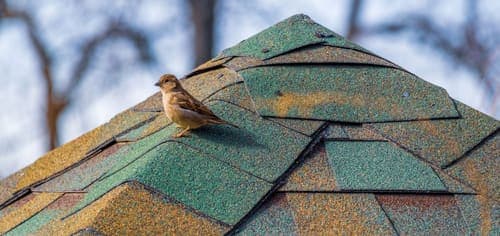
Architectural shingles are two layers of mat laminated together, which is why you'll also hear them called a dimensional shingle. They're heavier than a three tab shingle roof, they hide a slightly wavy deck, and most lines carry a 130 mph wind rating in this part of the Gulf Coast. That rating is not free, though. It assumes six nails per shingle, driven flat in the nailing strip, not four driven high and crooked.
Get that wrong and the first tropical system that swings past Dauphin Island peels a course off like a bad toupee.
We stagger the courses properly too, so you don't end up with racing stripes running down the slope every time the sun hits it a certain way. The crew you'd meet for Mobile Siding Installation handles these tar shingles the same careful way.
Three Tab Shingle Roof
Three tab is the flat one. No shadow line, no layered look, just a single mat cut into three tabs, which is why it lays out fast and why a whole street of them can go on before the afternoon storms roll in off the bay. In our heat, expect fifteen to twenty years out of three tab shingle roofs, where a dimensional shingle usually buys you longer.
The failure is almost always nailing. High nails, above the strip, and those tabs peel in the first serious blow. We hit the nail line, six nails per shingle, hand sealed at the rakes.
Folks who call us about Mobile Siding Installation often ask about tar shingles in the same breath, because the same wind that lifted the tabs took a run at the wall too.
Roof Air Vents
Roof air vents are the boxes you see sitting flat on the back slope, and they only work if air can get in down low to replace what they let out. Rule of thumb we follow: one square foot of net free vent for every 150 square feet of attic floor, split about half intake and half exhaust.
The intake comes through the soffit, which is why the guys on our Mobile Siding Installation side and the shingle crew talk to each other before anybody cuts a hole.
Get it wrong and an August attic here runs past 140 degrees, curls the tar shingles from underneath, and cooks your AC bill along with it.
Cutting in and flashing six box vents is a half day. Painting over blocked soffit vents is the mistake we find most.
Roof Vents
Vents are the part of a roof nobody thinks about until the attic sits at 140 degrees in July and the shingles overhead start curling years early.
Exhaust only works if air can get in down low. Half the attics I open around Midtown have soffit intake painted shut or packed solid with blown insulation, so the roof vents up top end up pulling cooled air straight out of your house instead of hot air out of the attic.
On a tar shingles tear-off we figure net free area against the attic square footage first, then set box vents, turbines or a combination, cut clean and tucked under the course above so nothing backs up during a Gulf downpour. If the soffit panels are chalky or crushed, we straighten that out during a Mobile Siding Installation and get real intake in the same trip.
Ridge Vents On Roof
A ridge vent is just a slot cut along the peak, but the slot is where crews get lazy. We cut back about an inch and a half on each side of the ridge board, not a scratch through the shingles, and we stop the cut short of the gable ends so wind driven rain coming off the bay doesn't get a free doorway.
Then a baffled vent, capped with shingles from the same bundle as your tar shingles so it disappears into the roofline.
Here's the part people miss. Ridge vents on roof peaks do nothing without intake below them. No clear soffit, and you've built a chimney with no draft, so the attic bakes past 130 in July and cooks the shingles from underneath. We check intake before we cut, the same way we check it on a Mobile Siding Installation job.
Asphalt Shingles Installation
Tear-off first. We strip to bare deck, because you can't judge plywood you can't see, and around here the soft spots hide in valleys and along chimney sides. Bad sheathing gets replaced, then synthetic underlayment, then peel-and-stick membrane at the eaves and valleys where wind-driven rain wants to run uphill.
Then nails. Six per shingle for our coastal wind zone, driven flush and inside the nailing strip. Overdriven nails cut through the mat, high nails hold nothing, and that's how a roof that looked fine at Mardi Gras loses a slope in September.
Asphalt shingle roofing is simple work that punishes shortcuts. Tar shingles seal with heat, so a July install tabs down fast while a January cold snap takes its time.
Most houses run two to three days. If the walls are next, we line up Mobile Siding Installation right behind it so the flashing details match.
Dimensional Shingle
Folks around here still call the whole family tar shingles, but a dimensional shingle is really two layers laminated together, which is where the shadow line and the extra weight come from. That weight matters on the Gulf Coast. When a storm pushes up the bay and leans on your ridge, a heavy laminated shingle sits tight while an older three tab shingle roof starts peeling tabs halfway down the field.
We hand six nails into the common bond line, never above it, and we cut hip and ridge caps from matching architectural shingles rather than scrap.
Overdriven nails are the quiet killer. The gun cuts the mat, the shingle holds fine until the first real August blow, and then it doesn't.
Most homes here take one to three days. The crew handling your Mobile Siding Installation is the same crew on the roof, so the wall and the roofline actually agree with each other.
What the job involves
Every tar shingle job starts with a tear-off, down to bare deck. That's where we find the soft plywood, and after a few Gulf summers there's usually a sheet or two, most often in the valleys and around the chimney. We swap it out, then set drip edge, ice and water membrane at the eaves and valleys, synthetic underlayment, and a starter course before the field goes on. Six nails a shingle, not four.
Wind off the Bay doesn't care what the minimum says.
Architectural shingles run a little slower than a three tab shingle roof, since the ridge cap gets cut and stacked, and intake has to balance the ridge vents on roof lines or your attic bakes.
Two days on a straightforward house. If we're doing your Mobile Siding Installation as well, the roof goes first so the wall flashing laps right.
What it costs
Nobody likes a runaround on price, so here it is straight. Most shingle roof cost in this area lands between about $3 and $6 a square foot installed, and a full cost to redo roof job usually falls somewhere from $3,000 to $14,000 once you factor size, pitch, and how many layers of old tar shingles have to come off first. A three tab shingle roof sits at the low end.
Architectural shingles run higher because there's simply more material in every bundle. Soft decking, new ridge vents on roof lines, and flashing around a chimney move the number too, and I'd rather find that at the estimate than on day two. Call us at (251) 551-3653 and we'll price your actual house. If the walls are tired as well, pairing it with Mobile Siding Installation means one setup and one cleanup.
When tar shingles are the wrong fix
Tar shingles are the wrong fix on anything close to flat. Water needs pitch to get off a roof, and on a low-slope porch or a shed addition the shingles just hold it there until the deck turns spongy. That's a membrane job, the same rolled systems that go on commercial roofing, not a bundle of shingles and a prayer.
They're also wrong when the roof isn't what's leaking. I've climbed up after plenty of ceiling stains people blamed on the roofing and found water coming in at a window head or behind tired wood siding. Siding repair fixes that. A new roof doesn't, and you've spent the money either way.
And if the sheathing is soft, we pull it back to the framing. Shingle roofers who nail over rot are only renting you a dry ceiling.
Why choose us for this
Your tar shingles are cupping at the edges after another swampy summer, and what you want is to hire somebody once and then not think about the roof again for years.
So the number I write down is the number you sign. Two things move a shingle roof cost: how many layers have to come off, and what shape the deck is in underneath. If we pull the old courses and find a soft sheet of plywood, you see that sheet before it goes in the truck, not on the invoice afterward. An estimate is free and it books you into nothing.
What I will not agree to is laying new asphalt shingle roofing straight over cupped old shingles to keep a bid low. It telegraphs every hump within a season. My shingle roofers strip to bare deck, and that is hours a cheap quote leaves off the sheet.
Frequently asked questions
Can I just patch a few shingles instead of replacing the whole roof?
Often, yes. If the damage is one slope after a summer squall and the deck underneath is dry, we pull the bad tar shingles and weave in new ones. Replacement is the call when granules are gone across the field or the roof is past twenty years.
How long am I without a roof over my head?
Most single family homes here take two to three days. We tear off, dry in the same day, then set the architectural shingles and the ridge vents on roof the next. Rain in the forecast, we stage it slope by slope so nothing sits open.
How do we get started?
Call me at (251) 551-3653 and I'll get up there myself. If the gable ends need attention too, our Mobile Siding Installation crew can look while we're on site.
Contact Mobile Siding Pros now
Contact us now if the tar shingles up there are cupping at the edges, or you're finding granules washed into the flower bed under the downspout. Somebody's here weekdays, nine to five, and messages get a call back. The number is (251) 551-3653.
When we come out, we get on the roof instead of squinting at it from the drive. We look for soft decking, chimney and sidewall flashing, and whether the roof vents are moving air or just sitting up there for decoration. Pitch, how many old layers have to come off, and whether there's anywhere on the lot to set a dumpster all move what this job takes.
Tear-off, asphalt shingles installation, and the trim that ties the roof into the siding is one crew here, not three subs. Licensed, bonded and insured, with the certificate available on request. Not every asphalt shingle roofers outfit in town will show you theirs.