Rust streaks under the screw heads, a panel lifting at the eave, shingle grit in the gutters after every storm.
Most folks call us about metal roofing right after the four o'clock thunderstorm has clocked in five days running and something up there starts making a noise it never used to make. We came at this sideways. We built the company hanging siding, and after enough years wrapping houses and watching thin panels oil can and fasteners rust through over good work, we got serious about what stays put here.
Now we work as metal roofing contractors too, standing seam, corrugated metal, metal shingles, all over Mobile and the county.
What we refuse to do is lay panels over soft decking. If the sheathing has gone spongy around a chimney or a vent boot, it comes off first. A screw only holds as well as the wood behind it.
Keep going for how the work is done, what moves the price, where we cover, and what people want to know before they commit. Or call (251) 551-3653 and we will come take a look at it.
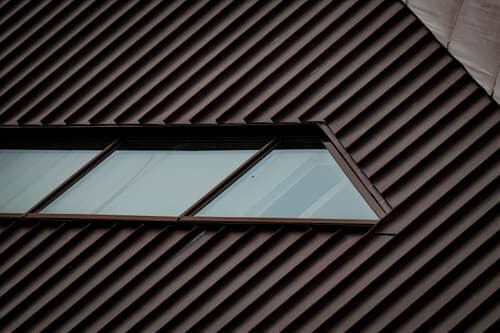
Standing Seam Metal Roof
No exposed screws. That is the whole idea. The panels run in one piece from ridge to eave, the seams stand up above where the water travels, and hidden clips do the holding. Those clips matter more than people think, because 24 gauge steel moves with the heat, and a forty foot panel pinned tight at both ends will oil can and buckle by the second August. We let it float.
Low slope porches get mechanically seamed rather than snap lock, since a snapped seam and a Gulf downpour blowing sideways off the Bay are not friends.
A simple gable is a few days. Hips, valleys and dormers add time, and the flashing at every penetration is where a standing seam roof is won or lost. Same fussiness we bring to Mobile Siding Installation, where the fasteners hide too.
Corrugated Metal
Corrugated metal is the honest workhorse of the panel world. Exposed fasteners, ribs you can see from the street, and a look that suits a barn, a carport or a camp house down on Dog River just as well as it suits a home.
The whole job lives or dies on the screws. Every fastener has a rubber washer, and if the gun is driven too hot the washer squishes out sideways and you've got a pinhole that finds you during the first August gully washer. We set them by feel, snug and flat, and we don't skip the closure strips at the eave where wasps and rain both like to get in.
Gauge matters too. Thinner panels oil can and dent; heavier galvanized steel roofing holds its shape in salt air.
We run corrugated metal siding on gable ends as part of our Mobile Siding Installation work when the look calls for it.
Tin Roof Installation
Tin roofs down here are usually 5V crimp or ag panel in galvanized steel, screwed straight through the face with neoprene washers. That is the whole ballgame. Those washers are the part that fails, and a tin roof installation done with the screws driven crooked or gunned down until the rubber squeezes out will start weeping at the fasteners inside of five or six summers.
We set them by hand feel, snug on the flat, and we walk a galvanized tin roof at year three to check torque after the panels have gone through a few August afternoons.
Underlayment matters more than the panel. Bare metal over a hot deck sweats in our humidity, so we run synthetic and vent it.
Most one-story houses take two or three days, weather permitting. The trim we bend for galvanized steel roofing comes off the same brake we use for Mobile Siding Installation, so gable ends and rakes actually match.
Metal Shingles
Metal shingles are what I reach for when a roof has too many angles to make long panels sensible. Those Midtown bungalows with three dormers, a hip, and a porch wrapping two sides will eat panel stock in offcuts. Shingles come stamped from steel or aluminum in pieces about a foot or two across, and they interlock on all four sides so the fastener hides under the next course.
That interlock is what keeps them home when the Bay hands you a 70 mph gust in September.
Of all the metal roofing systems we install, these are the fussiest to cut. Done poorly, they leak at valleys and hips where somebody face nailed the trim and let it work loose. We run closed valleys with real flashing and hem every cut edge.
The same crews handle Mobile Siding Installation, so your gable trim and roof line finally agree with each other.
Metal Roofs That Look Like Shingles
Some folks want metal up top and still want the house to look like it belongs on Government Street. That's what metal shingles are for. They're stamped steel panels that interlock on all four edges and clip down hidden, so nothing gets face-nailed through the finish, which is where the cheap installs start weeping about two summers in. From the curb they read as slate, shake or architectural shingle.
Up close they're a metal roofing system built for the wind that comes off the Gulf, and they won't cup or grow moss the way cedar does in our humidity.
Decking matters more here than it does under a standing seam metal roof. Every dip in the plywood telegraphs through the panel, so soft spots get sheeted over first. If the gables want attention while we're staged, that's a Mobile Siding Installation and it rides on the same schedule.
Standing Seam Metal Roof Installation
Standing seam metal roof installation is the one I push hardest on houses with clean roof lines, because the fasteners sit hidden under the seam instead of punching through the face of the panel where they can back out and weep. We run panels eave to ridge in one length where the roof allows it, clip them so the steel can move as it heats, and hem the bottom edge into the drip edge.
Skip that hem and the first hard blow drives rain right up under the panel.
What moves the price is how many valleys, hips and pipe penetrations need flashing, the gauge and finish you choose, and whether the old shingles come off first. A galvalume metal roof over open framing prices out nothing like insulated metal roofing on a low-slope addition. Most houses run two to three days.
Steel Roofing
Steel is the workhorse behind most of the metal roofing systems we hang in this town. What matters isn't the steel, it's what's on it: a Galvalume or aluminum zinc coating under a baked-on finish, in 24 or 26 gauge. Salt air off the Bay finds every bare cut edge, and rust never sleeps, so we seal cuts, keep panels off treated lumber, and set screws with neoprene washers that won't back themselves out by year ten.
Underneath goes high-temp synthetic underlayment, not felt that turns to dust in a Mobile August. Fastening pattern follows our wind zone, edges and ridge included, because that's where uplift starts.
Three to five days on a typical house. Insulated metal roofing runs longer. The same coating logic shapes our Mobile Siding Installation work, since steel always fails at the edges first.
Galvanized Steel Roofing
Galvanized steel is zinc over steel, and the zinc is the whole deal. Down here that matters more than it does in Birmingham, because salt drifting in off Mobile Bay eats coating for breakfast. I spec G-90 zinc where a galvanized tin roof makes sense, 26 gauge over 29 whenever the budget allows, and a Kynar 500 finish rather than bare metal, which chalks and streaks within a few Gulf summers.
Rust never sleeps, and it starts at the cut edges. Panels sheared on site need the ends sealed and hemmed, not left raw on the eave.
The other killer is mixed metals. Copper flashing or the wrong fastener against galvanized steel roofing sets off a slow galvanic reaction, and you find it as a stain first, a hole later. We use butyl-washered screws driven to the gasket, not past it.
Galvanized Tin Roof
A true galvanized tin roof is zinc over steel, usually a 5V crimp or a barn panel in 26 gauge, and it earns that soft gray patina the same way an old fish camp on the Causeway did. Left unpainted, it weathers. That's the charm.
What kills it isn't the panel, it's the details. Cut edges left raw at the eave start rusting first because the shear takes the zinc off. Screws driven crooked or overtightened crush the neoprene washer, and eight or ten years later you've got a hundred tiny drips instead of one honest leak. Salt air this close to the Bay speeds all of it up.
So we hem or seal cut ends, set fasteners in the flat with a depth-set gun, and use gasketed screws rated to outlast the coating rather than whatever came in the box.
Stone Coated Steel Roofing
Stone coated steel is the panel for anyone who wants the look of barrel tile or wood shake without the weight sitting on eighty year old rafters. It's Galvalume steel pressed into profile, then coated in ceramic granules, so it reads like tile from the street and shrugs off a Gulf gust like steel. Most of these systems go over battens, which gives you an air gap that helps in a Mobile August.
Done wrong, it fails at the cut edges. Every trimmed panel end needs sealing, or you get rust creeping out from under the granules in two or three seasons of salt air. Same with walking the roof: step in the flat of a pan instead of the batten and you've dented it.
Plenty of folks find us through Mobile Siding Installation and learn we shape metal for roofs too.
Galvalume Metal Roof
Galvalume metal roof panels are what I hang on most houses close to the water here, steel carrying an aluminum-zinc coating that keeps protecting the cut edges and scratches long after a plain zinc-coated panel has given up. Bare mill finish or painted, 24 gauge where the wind comes off open water.
What kills it isn't weather, it's contact. Set it against pressure-treated lumber, against wet mortar at a chimney, or downhill of a copper vent, and you'll get rust bleeding at the laps inside two summers. Cheap fasteners do the same. We separate treated wood with underlayment and use gasketed screws matched to the panel.
Price moves on gauge, finish, valley and penetration count, and whether the old roof comes off first. Insulated metal roofing systems run higher and take the drumming out of a hard rain.
Insulated Metal Roofing
Insulated metal roofing is the version I push when the upstairs is unlivable by two in the afternoon and the AC never catches up. Instead of screwing panels straight onto bare decking, we run high-temp underlayment, then rigid polyiso board, then hat channel, then the panel, so there's a thermal break and an air gap doing real work between the metal and your plywood. That gap matters.
Panels laid tight to a warm deck sweat on the underside, and that moisture soaks into the sheathing until you've got soft spots and a smell nobody can trace.
What moves the price is foam thickness, how many pipes, vents and valleys we have to detail around, and what shape the deck is in once the old roof comes off.
Plenty of metal roofing contractors skip the hat channel and crush the board flat with fasteners. Compressed insulation is just expensive cardboard.
What the job involves
Here's what a metal roof day actually looks like at your house. We strip the old shingles down to the deck, because covering rot never made rot go away, and Gulf humidity finds every soft spot around a chimney or a bathroom vent. Bad plywood gets replaced, then synthetic underlayment, then peel and stick at the eaves and valleys where wind driven rain gets pushed uphill.
Panels go on with hidden clips or gasketed fasteners, closures at the ridge, and flashing bent on site.
Two to four days on most houses. Steeper pitch, more valleys, more penetrations, heavier gauge, all of that stretches it.
Where crews go wrong: cutting panels with an abrasive blade. Those hot filings rust into little orange freckles by next summer. We shear or nibble instead.
If we're already doing your Mobile Siding Installation, we'll color match the trim while we're up there.
What it costs
There's no honest flat number for a metal roof cost, and anyone who quotes you one over the phone without seeing the roof is guessing. Corrugated metal or galvanized steel roofing on a simple gable sits at the low end.
A standing seam metal roof cost climbs with every valley, dormer, chimney and plumbing boot, because each one gets hand-flashed, and a cut-up hip roof can run a crew three to four days where a straight ranch is done in one. Metal shingles land in between. Tear-off and soft decking from years of Gulf humidity move it too. Call me at (251) 551-3653 and I'll get up there and price the actual roof.
For scale, our Mobile Siding Installation work runs from about $3 a square foot for mid-grade vinyl to north of $45 for premium material, and metal roofing spreads just as wide.
When metal roofing is the wrong fix
Metal roofing is the wrong fix in a few situations, and I say that as one of the metal roofing contractors people around here call first. One leaking valley or a strip of lifted shingles is a roof repair, and buying a whole new system to chase a single stain on your ceiling wastes money that could go to gutters.
A dead-flat deck over a back addition or a downtown storefront wants a membrane, which is commercial roofing, because panels need pitch to move water off. In the Oakleigh Garden District, a review board will sometimes turn panels down flat, and good tar shingles are the right answer there. And if you called about metal siding for a house wearing sound, tight wood siding, scraping and painting that beats wrapping it.
We do enough roofing to know which one your house is asking for.
Why choose us for this
You've had metal roofing quoted before, or you've had the old roof patched twice since the last storm came through, and you're not looking for a speech about craftsmanship. You want to hire it once and stop thinking about it.
So, plainly: the number we write down is the number you sign, and the crew that starts your standing seam roof stays on it until the last piece of trim is bent and fastened. Nobody peels off to a second job with your ridge cap sitting open.
I won't pin panels down solid and pretend heat doesn't move metal, and I won't lay new steel over a spongy deck to save a day of tear-off. That's where a cheaper quote finds its savings, and you meet it again as a stain at the wall flashing.
The estimate costs nothing and books you into nothing.
Frequently asked questions
Can you install a metal roof over my existing shingles?
Often, yes. If the deck is sound and the code official signs off, we run purlins or a slip sheet over one layer and set the panels on top. But if there's soft decking or two layers already up there, we tear off. Hurricane country is no place to guess what's under a standing seam roof.
Will my metal roof rattle or leak in a storm?
Not if the fasteners are right. Most leaks I see on a tin roof installation come from exposed screws whose neoprene washers dried out around year twelve. Standing seam hides the fasteners under the seam, which is why we push it for anything facing the bay wind.
How do we begin?
Ring me at (251) 551-3653 for a roof look. If you're pairing it with Mobile Siding Installation, we schedule both crews the same week.
Contact Mobile Siding Pros now
Reach out now and we'll get you on the schedule for a look at the roof. We handle metal roofs for homes all over the county, and as metal roofing contractors we'd rather climb up and measure than guess from a driveway. The number is (251) 551-3653. Somebody's here weekdays, nine to five, and if a job genuinely can't wait, we'll work it in.
Have a few things ready when we talk: the age of the house, whether the old shingles are coming off or staying put, how many valleys, chimneys and vent stacks are up there, and how close a truck can park to the eave. Those move the price far more than whether you settle on a galvalume metal roof, a metal tile roof, or panels that read like shingles from the curb.